Differential responses of Citrus species to Huanglongbing infection for physiological, biochemical, nutritional, bio-stress enzymes, and molecular markers
Huanglongbing (HLB): What Citrus Genetics Can Teach Us About the Future of Disease Management
Huanglongbing (HLB), or citrus greening disease, remains one of the greatest threats to global citrus production. A recent 2026 study published in Scientific Reports provides valuable evidence that not all Citrus species respond to HLB in the same way.
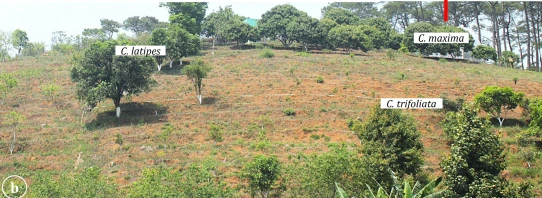
Researchers evaluated nine Citrus species under field conditions, studying their physiological, nutritional, biochemical, enzymatic, and molecular responses to Candidatus Liberibacter asiaticus (CLas), the bacterium associated with HLB.
The differences were remarkable.
PCR testing showed 100% HLB incidence in several species, including Citrus sinensis, C. reticulata, C. limonia, C. jambhiri, C. karna, and C. volkameriana. In contrast, C. trifoliata showed 80% incidence, while C. latipes tested negative in all evaluated plants.
Why is Citrus trifoliata particularly interesting?
For commercial citrus production, one of the most relevant findings concerns C. trifoliata, widely used as genetic material and as a rootstock.
Even when infected, C. trifoliata maintained comparatively better physiological performance. It showed the highest total chlorophyll content among infected plants, as well as relatively high photosynthetic activity and the highest stomatal conductance.
Its nutritional response was also noteworthy. In infected plants, C. trifoliata maintained comparatively high concentrations of nitrogen, phosphorus, calcium, magnesium, and zinc.
This suggests an important distinction: infection does not necessarily mean the same level of physiological damage in every genotype.
HLB is much more than an infection
The study also reinforces a concept that is fundamental for understanding HLB: the disease profoundly alters whole-plant physiology.
Across infected citrus plants, researchers observed reductions in chlorophyll, photosynthesis, stomatal conductance and several nutrients, together with changes in antioxidant defense systems. At the same time, stress indicators such as proline, hydrogen peroxide (H₂O₂), malondialdehyde (MDA), and particularly starch increased.
One especially important observation was that HLB-infected plants showed an average 105.28% increase in leaf starch, associated with disruption of phloem transport and source–sink relationships.
This helps explain why HLB should not be considered only as a bacterial disease. It progressively becomes a physiological, nutritional, vascular, and metabolic disorder of the entire plant.
Rootstocks may become increasingly important
The results open an important avenue for citrus breeding and rootstock selection.
The study identified C. latipes, C. trifoliata, and C. maxima as the species showing the smallest physiological, nutritional, and enzymatic changes associated with HLB. The authors suggest that C. latipes and C. trifoliata could provide valuable genetic resources for future HLB resistance and tolerance programs.
For commercial citriculture, this raises a broader question:
Should rootstock selection be evaluated not only in terms of yield, tree size, soil adaptation and fruit quality, but also according to its capacity to maintain physiological functionality under HLB pressure?
I believe the answer will increasingly be yes.
Future HLB management will probably not depend on a single solution. It will require the integration of vector control, early diagnosis, nutrition, canopy management, root health, environmental monitoring and, fundamentally, genetic tolerance through improved cultivars and rootstocks.
The future of citrus production may therefore depend not simply on preventing infection, but also on developing trees capable of remaining physiologically productive when exposed to disease pressure.
Source: Rymbai, H., Banerjee, A., Verma, V.K., Baiswar, P. & Mawlein, J. (2026). Differential responses of Citrus species to Huanglongbing infection for physiological, biochemical, nutritional, bio-stress enzymes, and molecular markers. Scientific Reports, 16:24053.